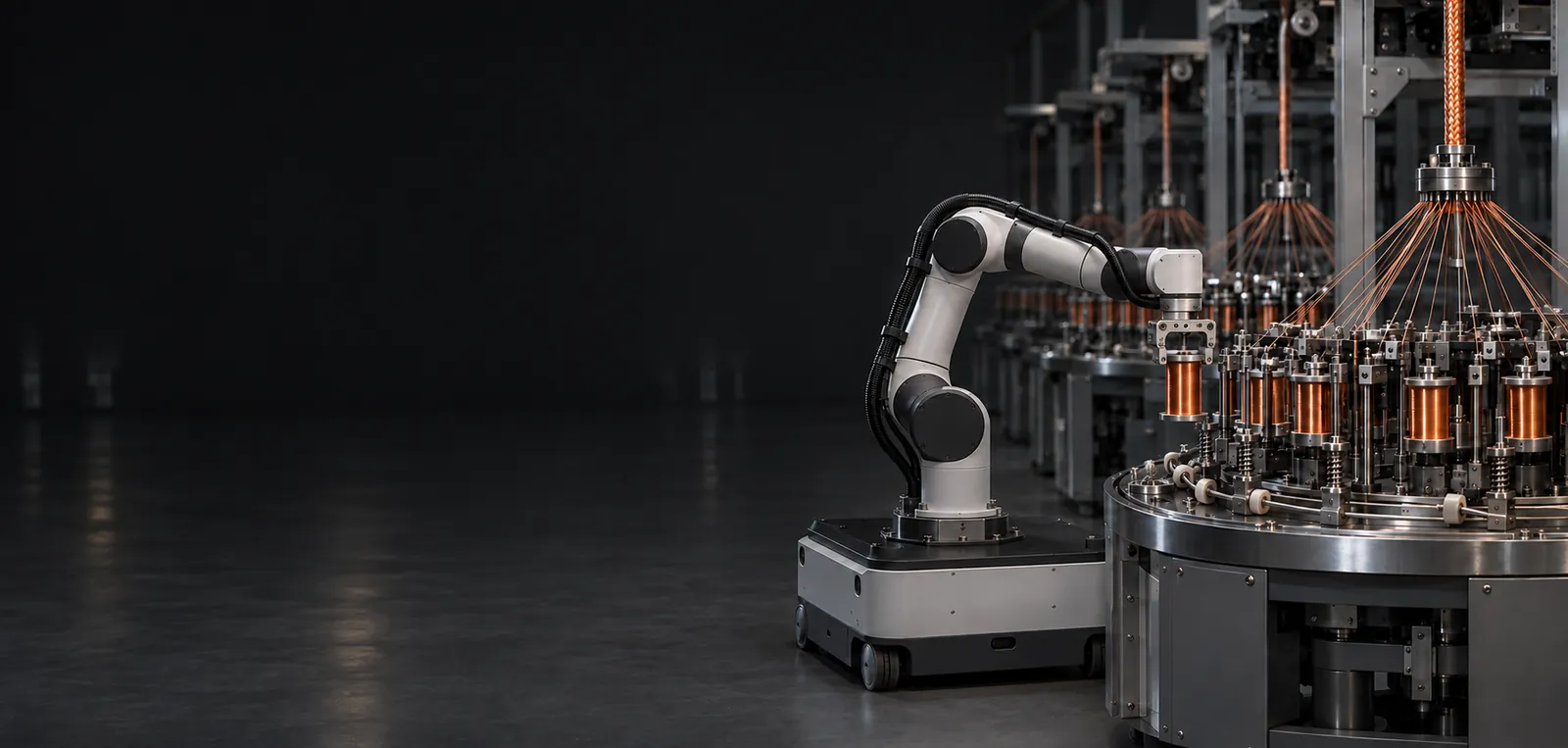
Braiding machines
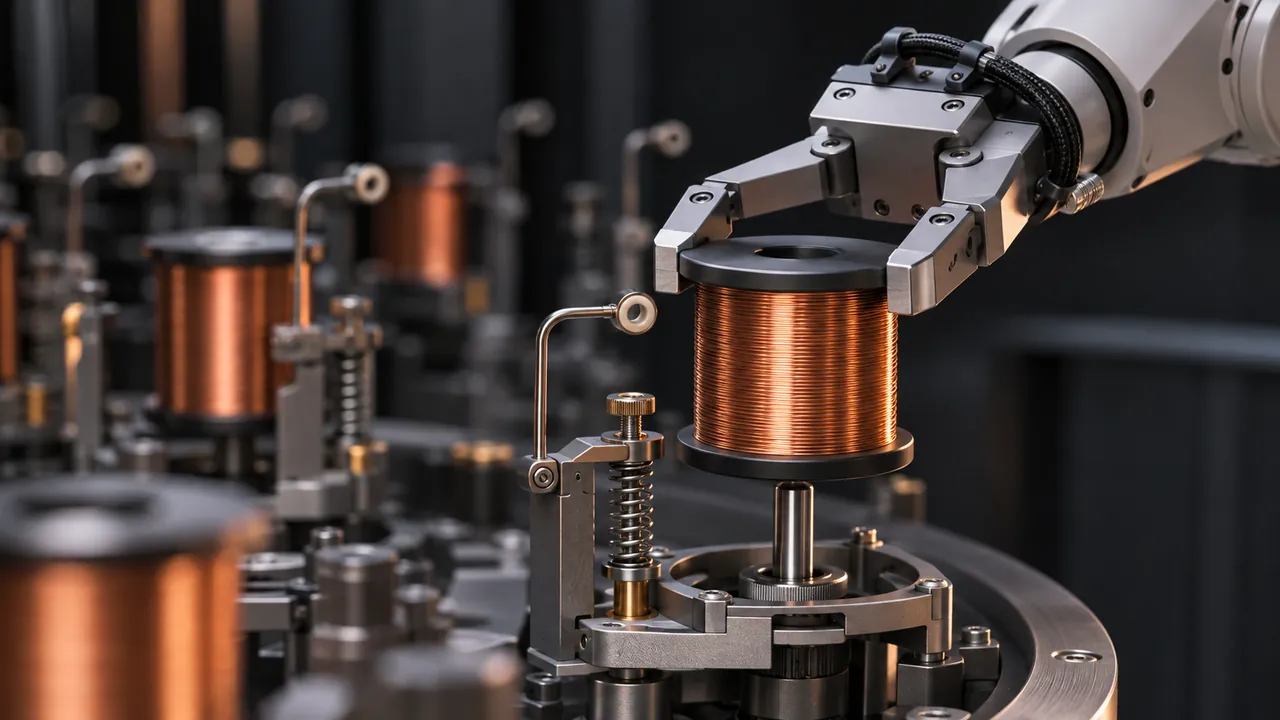
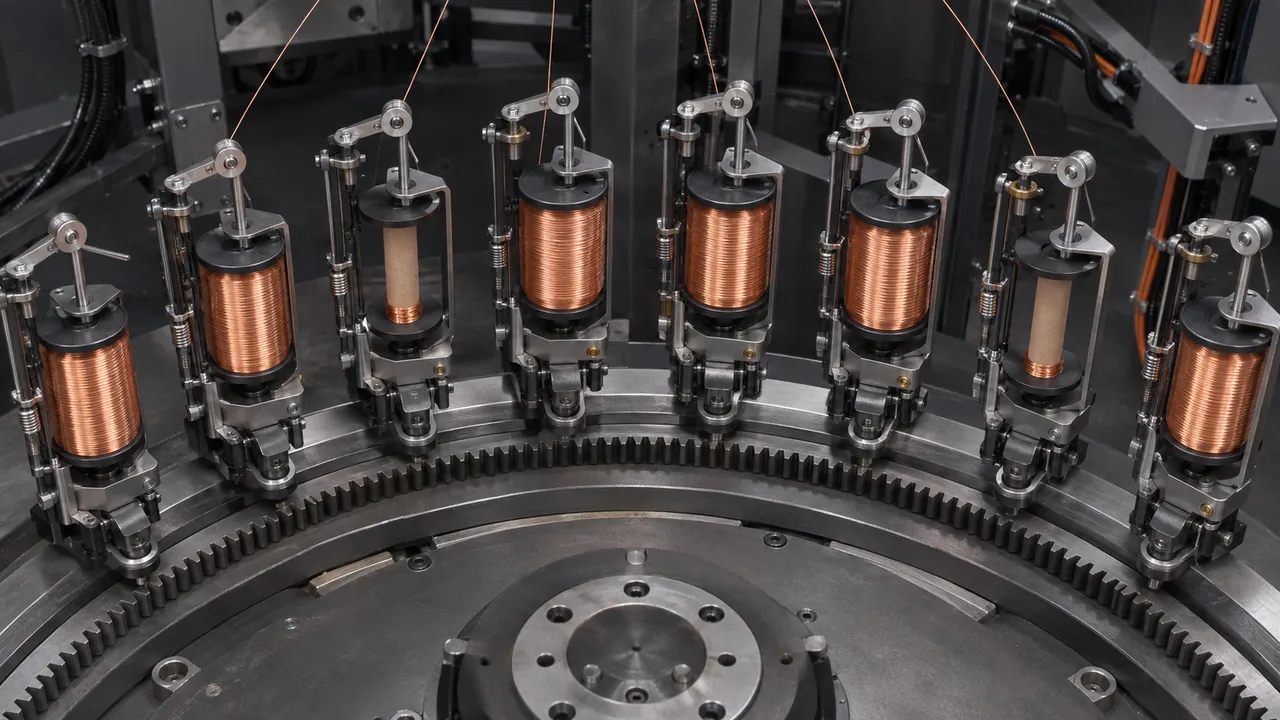
A cobot reaches the carriers from defined access positions. The gripper guides the bobbin onto its spindle while the machine is stopped.
Flagship project · Textile, wire & cable
Braiding and rope machines stop every time a bobbin runs empty. We automate the whole change: detection, supply and swap. Our goal: less waiting at the machine and less lifting for people.
The problem
Braiders run with many carriers, halls with many braiders. Every change interrupts production.
Large bobbins call for lifting aids and precise positioning, again and again.
Missing supplies or waiting for an operator prolongs the stoppage.
The solution
A mobile robot with an arm, a camera on the wrist and a link to the machine control.
Sensors and cameras check the fill level of the bobbins.
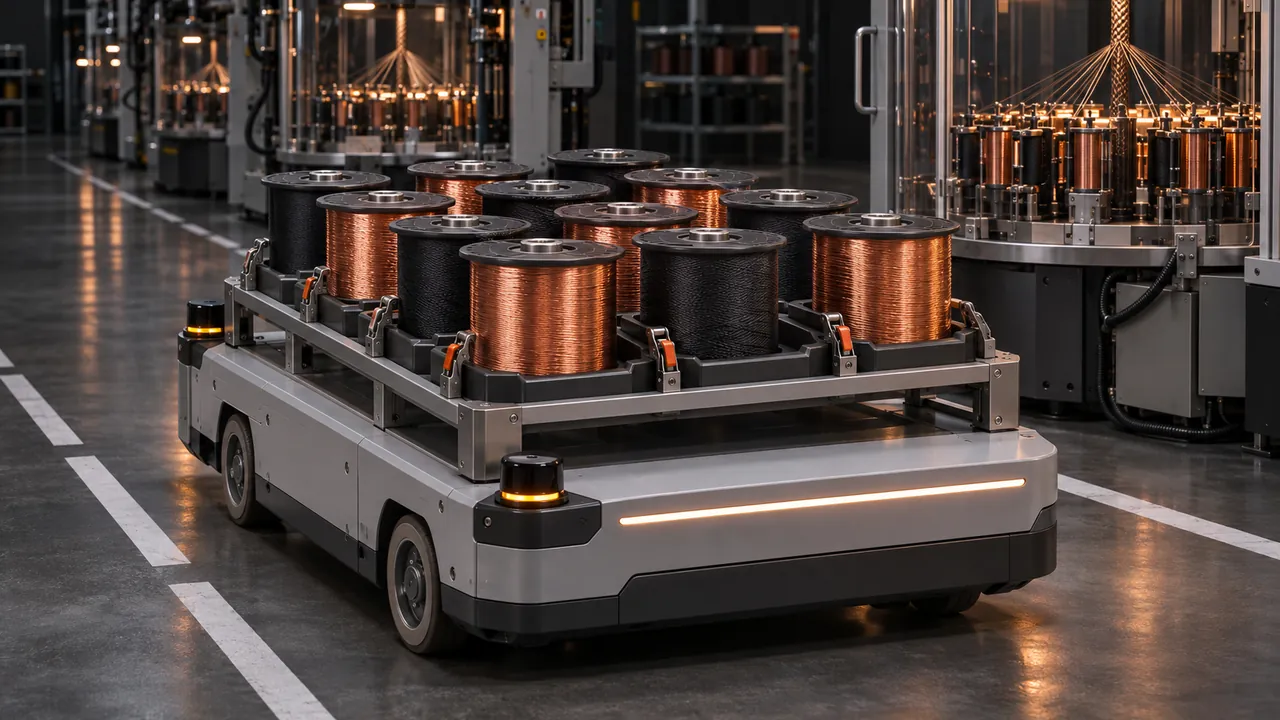
A mobile robot brings full bobbins from the winder or the store.
The machine stops with the carrier in its change position; the safety system clears the robot.
The arm removes the empty bobbin and places a full one, guided by vision.
Material-end handling secures the yarn or wire; tension is checked before the restart.
The machine restarts; empty bobbins return to the winder.
Two machine families
A cobot reaches the carriers from defined access positions. The gripper guides the bobbin onto its spindle while the machine is stopped.
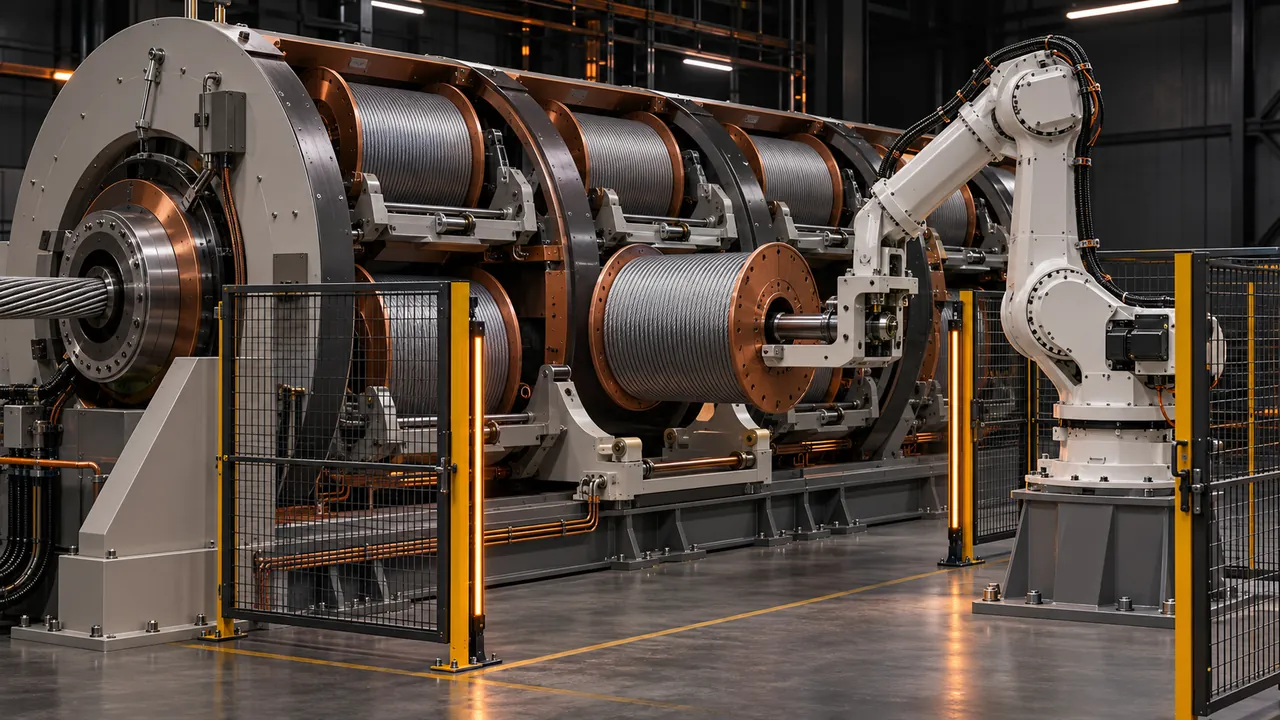
Large bobbins call for a stronger robot or rail-mounted handling inside a guarded cell. The cradle is opened, the bobbin is lifted in and locked.
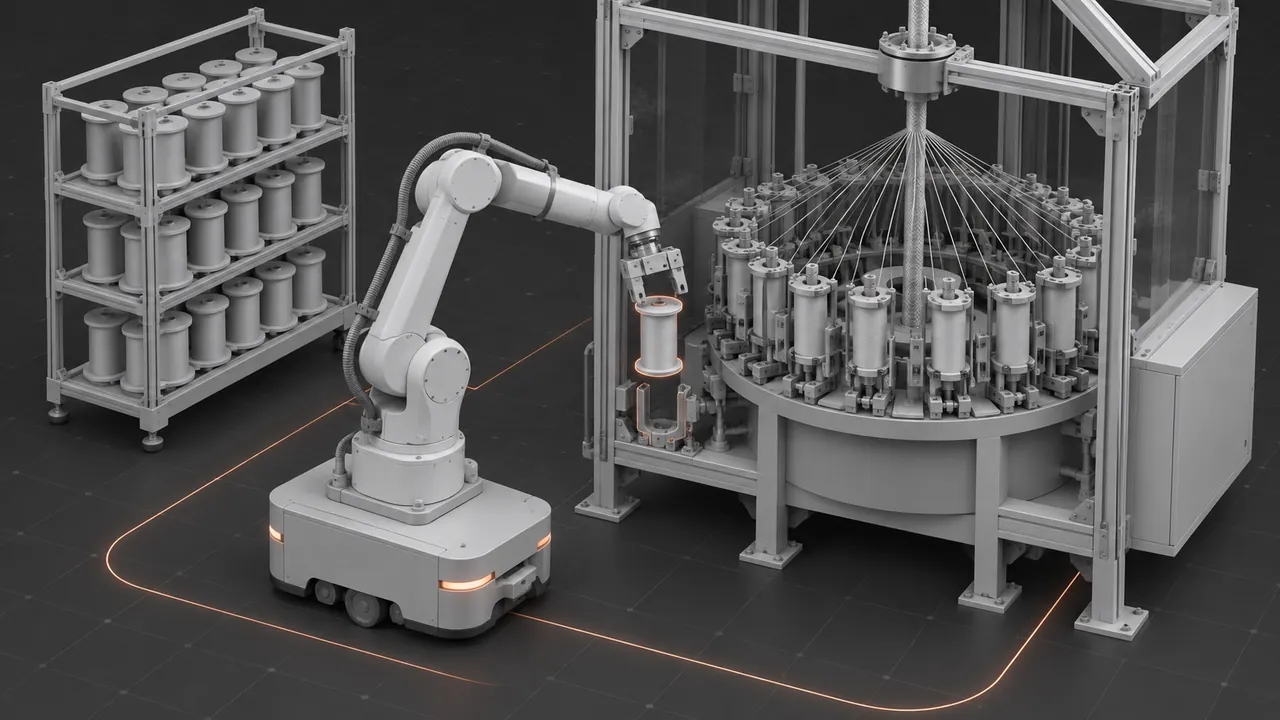
Digital twin
The machine, its carriers and the robot exist in simulation before anything moves on site. Gripper strategy, vision models and the change sequence are trained and checked there.
Vision
The wrist camera identifies carriers and bobbins and estimates their fill level, so the robot plans the next changes in time.
Integration
Signals from the machine control: stop in change position, bobbin status, restart.
Laser scanners, speed and separation monitoring, guarded zones for heavy loads.
Connects winders and stores; empty bobbins return automatically.
We assess access, interfaces and bobbin formats, then design tooling and sequencing for each machine.
Send us your bobbin types, machine models and shift pattern. We prepare a first cell concept and a simulation of your line.